


Shimla, October 31, 2026:
Villages across Himachal Pradesh are already taking significant steps to adapt to the impacts of climate change, ranging from shifting crop patterns and reviving traditional water sources to strengthening disaster preparedness at the grassroots level. A new independent study by the Council on Energy, Environment and Water (CEEW), supported by the International Centre for Integrated Mountain Development (ICIMOD), has documented these initiatives across 12 gram panchayats in four districts of the state.
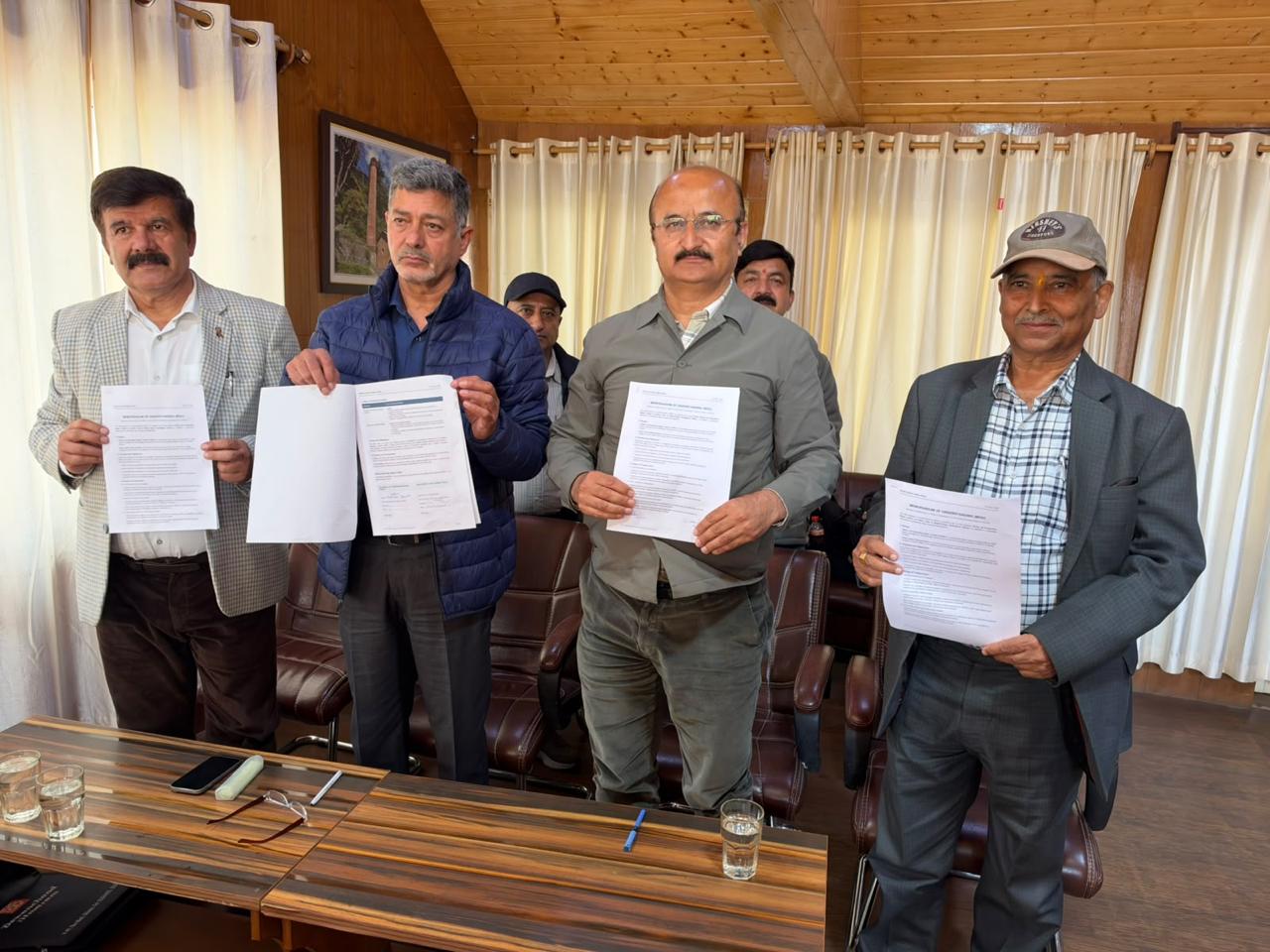
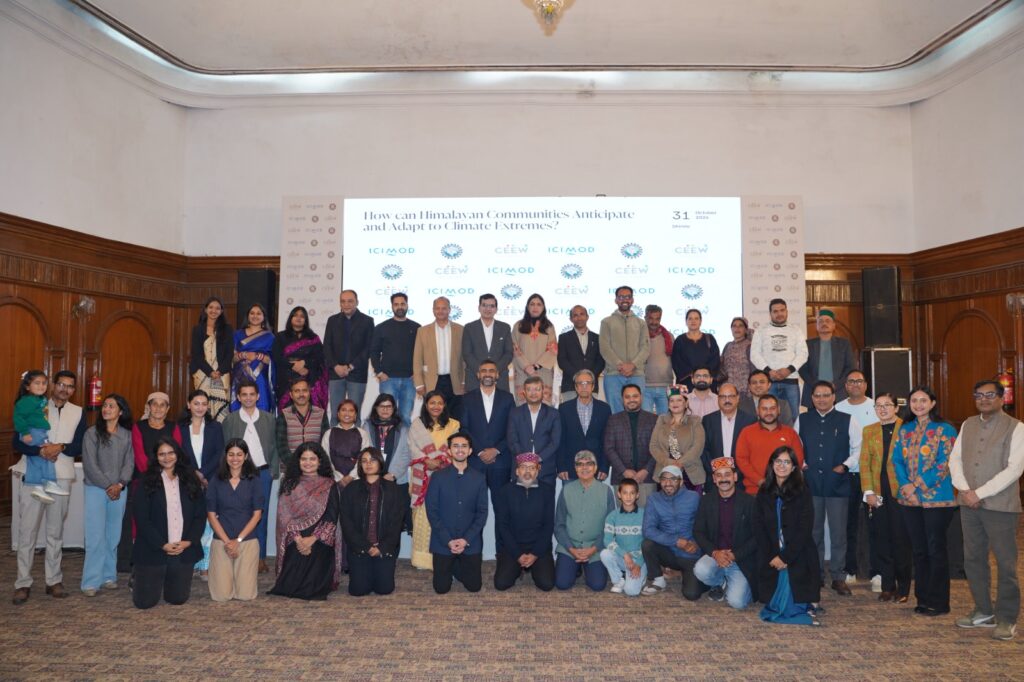
The study, titled How Can Himalayan Communities Anticipate Risks and Adapt to a Changing Climate? Evidence from 12 Gram Panchayats in Himachal Pradesh, was released on Saturday at a multi-stakeholder dialogue held at Hotel Peterhoff, Shimla.
The report was released by Shri Duni Chand Rana, IAS, Managing Director, Horticultural Produce Marketing and Processing Corporation (HPMC) and HP Agro Industries Corporation Ltd., Shimla, along with Shri Nishant Thakur, HPAS, Additional Secretary. Dr Amina Maharjan, Senior Livelihoods and Migration Specialist at ICIMOD and IPCC Lead Author on Adaptation, Impacts and Vulnerability, and Mr Rajeev Ahal, Executive Director, Himalayan Institute for Transformative Action (HITA), were also present.
The study highlights that all 12 gram panchayats covered in Mandi, Kullu, Sirmaur and Shimla districts have experienced socio-economic impacts associated with changing climatic conditions. Significantly, all these panchayats have also initiated measures to address the emerging challenges.
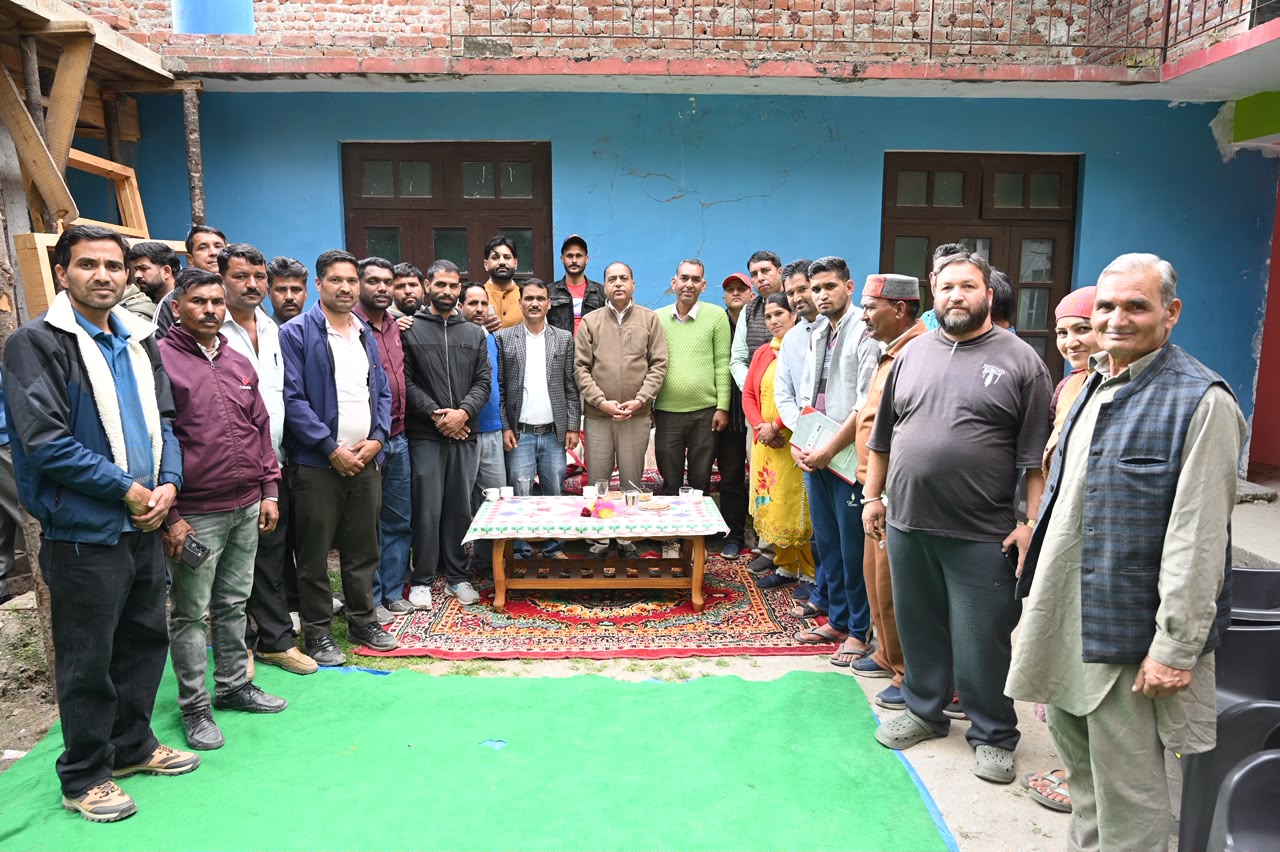
Based on field visits and focus group discussions, the research documented community-led adaptation practices and explored how villages could anticipate future climate risks and prepare for potential disasters before they occur.
As part of this exercise, more than 60 community representatives, government officials and NGOs participated in a strategic foresight exercise in Shimla in July 2025. The process brought together scientific evidence, local knowledge and stakeholder perspectives to identify possible future challenges and develop practical solutions.
The exercise resulted in 25 anticipatory adaptation solutions across five sectors, focusing on measures that can minimise the impact of climate-related hazards before they develop into major crises.
Farmers adopt new crops and sustainable farming practices
The study highlights how farmers are gradually modifying traditional agricultural and horticultural practices in response to changing climatic conditions.
In Sandhu, Shimla district, natural farming has expanded to more than 20 families after proving profitable and more resilient to extreme weather events. In Bajaura, Kullu district, farmers have shifted towards persimmon cultivation as plant viruses began affecting pomegranate crops. Similarly, residents of Parara in Sirmaur district have adopted integrated farming practices, combining garlic cultivation with special varieties of apples.
Women’s groups lead efforts to revive traditional water sources
The study also highlights community-led initiatives to restore traditional water resources. Thana Kashoga in Sirmaur district once had 35 perennial baoris, or traditional spring-fed water tanks, of which only 10 remain today.
With training and support from the People’s Science Institute and the Centre for Business and Entrepreneurial Development, local women’s groups have taken responsibility for cleaning and maintaining these water sources every month. So far, five springs have been revived, while restoration work on another five to six is underway.
Shoghi strengthens village-level disaster preparedness
Shoghi village near Shimla has emerged as an example of community-based disaster preparedness. Following the devastating landslides and floods of 2023, the village established a disaster management committee with the support of NGO ADRA India.
Since then, villagers have received training in first aid and evacuation procedures. The study notes that such village-level disaster management committees are still uncommon across the state.
The Himachal Pradesh State Disaster Management Authority (HPSDMA), which supported the study, launched the Aapda Rakshak Scheme in 2026.
The report recommends strengthening and equipping panchayat-level disaster management committees, including through the use of CEEW’s Gram Panchayat Climate Resilience Calendar. It also suggests integrating village-level climate resilience planning into Gram Panchayat Development Plans.
More than 30 existing government policies and schemes have been identified as potential sources of support for implementing the proposed solutions.
Other recommendations include establishing a strategic foresight cell within the National Disaster Management Authority and introducing forecast-based financing mechanisms, under which funds can be released when predetermined risk thresholds are reached.
Duni Chand Rana highlights the need for anticipatory planning
Shri Duni Chand Rana, IAS, said the CEEW study draws on ground-level evidence from different parts of Himachal Pradesh and highlights how gram panchayats are experiencing climate extremes and identifying measures to strengthen their resilience.
He observed that increasingly frequent flash floods, cloudbursts and heavy rainfall were disrupting lives, essential infrastructure, horticulture, supply chains and tourism. Rising temperatures and changing snowfall patterns were also affecting apple flowering, harvesting and fruit quality, posing challenges to local livelihoods.
He emphasised the need to incorporate anticipatory action and strategic foresight into development planning so that infrastructure, institutions and communities could be better prepared for future climate extremes.
Nishant Thakur stresses proactive disaster management
Shri Nishant Thakur, HPAS, Additional Secretary (Revenue and Disaster Management), HPSDMA, said recent floods and landslides had caused losses and damages exceeding Rs 20,000 crore in Himachal Pradesh, underlining the urgent need to strengthen disaster preparedness.
He said the state was using GIS, rapid incident reporting systems and emerging technologies to identify risks and improve disaster response.
The focus, he added, was now shifting from reactive measures towards proactive preparedness, including the development of gram panchayat-level disaster management plans with the support of research institutions. He emphasised that local communities are always the first responders during emergencies, making grassroots preparedness essential for building resilience.
CEEW calls for stronger community-government partnerships
Shreya Wadhawan, Programme Lead and co-author of the study at CEEW, said the documented initiatives reflected a common pattern involving local leadership and institutional support.
She explained that successful adaptation efforts were often driven by local champions, including farmers, women’s groups and village committees, with additional support from Krishi Vigyan Kendras, NGOs or government schemes.
She stressed that such partnerships needed to become more widespread so that panchayats could take timely action before climate-related hazards turned into disasters.
ICIMOD highlights the importance of Himalayan climate resilience
Dr Amina Maharjan of ICIMOD said the Hindu Kush Himalaya region was warming faster than the global average, and developments in its mountain villages had implications for nearly 1.9 billion people living downstream.
She noted that Himachal Pradesh’s gram panchayats demonstrated how climate adaptation could begin at the community level. Experiences from Nepal, Bangladesh and Bhutan also showed that integrating strategic foresight into climate adaptation and disaster management was achievable.
Mr Rajeev Ahal, Executive Director of HITA, emphasised that effective climate adaptation required coordinated efforts by states, districts and villages to identify risks, plan responses and implement strategies suited to local conditions.
He said state-level strategies must incorporate ground realities and local experiences into broader planning processes to prepare for different future climate scenarios. He also highlighted the potential of Himachal Pradesh to emerge as a leading example in the Hindu Kush Himalaya region by expanding the initiative to more than 100 villages.
The study combines a literature review, field visits, focus group discussions across 12 gram panchayats in four districts, a two-day multi-stakeholder consultation in Shimla in July 2025 and two training-cum-consultation workshops in November 2025.
The researchers clarified that the findings are specific to the selected panchayats and should not be considered representative of the entire state. The 25 proposed solutions are outcomes of a strategic foresight exercise rather than estimates of losses avoided.