


New York, USA: 10 October, 2026
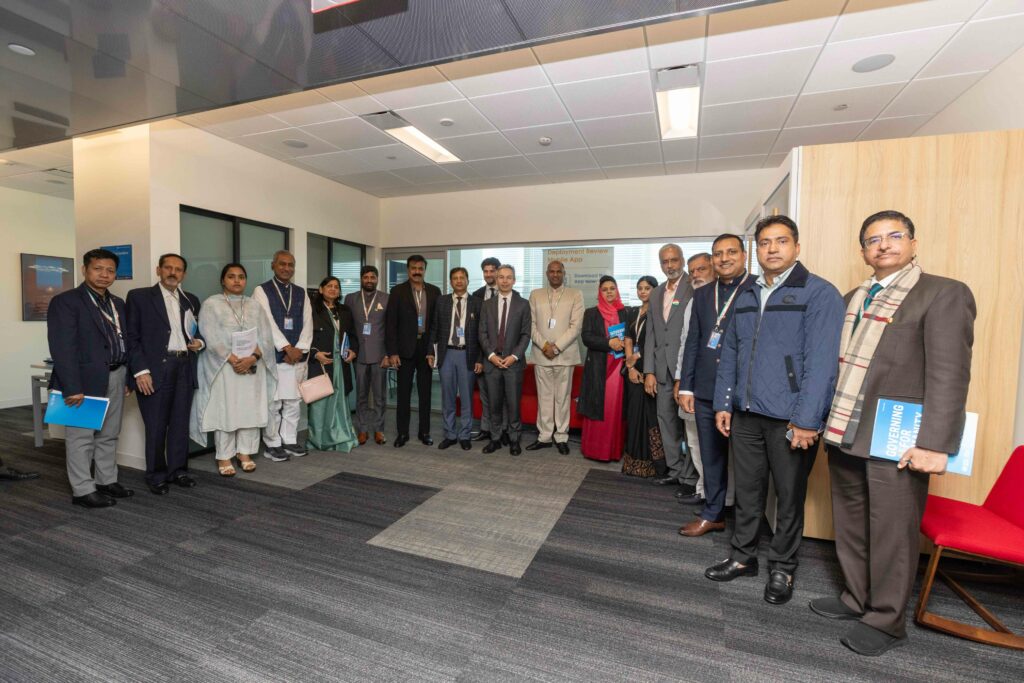
(UNHQ) in New York. Representing India, Rajya Sabha Member of Parliament Prof. (Dr.) Sikandar Kumar held extensive and constructive bilateral discussions with Mr. Quintin Chou-Lambert, Acting Head of the UN Office of Digital and Emerging Technologies.
During the meeting, Prof. (Dr.) Sikandar Kumar highlighted the dual-use nature of modern technologies, warning that unless AI is governed by strict global policy and ethical frameworks, it could prove as catastrophic to human survival as nuclear weapons. He specifically underscored that deepfakes, disinformation, cyber warfare, lethal autonomous weapons systems, and unchecked data exploitation now pose direct threats to democratic institutions, national sovereignty, and global peace.
India’s Vision: ‘Human-Centric and Inclusive AI’
Presenting India’s strategic outlook, Prof. Kumar clarified that while India strongly champions technological innovation, it must be driven by public welfare. AI should primarily be harnessed to advance the Sustainable Development Goals (SDGs)—including healthcare, modern agriculture, quality education, climate action, and poverty alleviation.
He emphasized India’s stance that setting global AI regulations and standards must not become the exclusive domain of a few developed nations; the priorities and concerns of developing and least developed nations (the Global South) must be integrated into mainstream policy formulation. Under the leadership of Prime Minister Narendra Modi, India’s model of digital inclusion and “AI for All” serves as a balanced blueprint for the world, ensuring technology bridges inequalities rather than widening them.
Prof. Kumar urged the international community through the UN forum to establish a legally binding and transparent regulatory framework without delay, focusing on:
Rigorous Auditing Standards: Routine safety evaluations of advanced AI models and algorithmic accountability.
Ethical Guidelines: Absolute protection of human values and data privacy.
Curbs on Weaponized AI: Stringent multilateral restrictions on autonomous warfare systems.
UN representative Mr. Quintin Chou-Lambert commended India’s balanced approach, acknowledging that the leadership of major global powers like India is vital to securing a safe digital future.
Concluding his address, Prof. (Dr.) Sikandar Kumar stated that the international community must respond to the risks of technology with the same speed and diligence with which technology itself advances. Enforcing robust global regulation and an ethical code of conduct is imperative to prevent AI from turning into an instrument of destruction.
(UNHQ) in New York. Representing India, Rajya Sabha Member of Parliament Prof. (Dr.) Sikandar Kumar held extensive and constructive bilateral discussions with Mr. Quintin Chou-Lambert, Acting Head of the UN Office of Digital and Emerging Technologies.
During the meeting, Prof. (Dr.) Sikandar Kumar highlighted the dual-use nature of modern technologies, warning that unless AI is governed by strict global policy and ethical frameworks, it could prove as catastrophic to human survival as nuclear weapons. He specifically underscored that deepfakes, disinformation, cyber warfare, lethal autonomous weapons systems, and unchecked data exploitation now pose direct threats to democratic institutions, national sovereignty, and global peace.
India’s Vision: ‘Human-Centric and Inclusive AI’
Presenting India’s strategic outlook, Prof. Kumar clarified that while India strongly champions technological innovation, it must be driven by public welfare. AI should primarily be harnessed to advance the Sustainable Development Goals (SDGs)—including healthcare, modern agriculture, quality education, climate action, and poverty alleviation.
He emphasized India’s stance that setting global AI regulations and standards must not become the exclusive domain of a few developed nations; the priorities and concerns of developing and least developed nations (the Global South) must be integrated into mainstream policy formulation. Under the leadership of Prime Minister Narendra Modi, India’s model of digital inclusion and “AI for All” serves as a balanced blueprint for the world, ensuring technology bridges inequalities rather than widening them.
Prof. Kumar urged the international community through the UN forum to establish a legally binding and transparent regulatory framework without delay, focusing on:
Rigorous Auditing Standards: Routine safety evaluations of advanced AI models and algorithmic accountability.
Ethical Guidelines: Absolute protection of human values and data privacy.
Curbs on Weaponized AI: Stringent multilateral restrictions on autonomous warfare systems.
UN representative Mr. Quintin Chou-Lambert commended India’s balanced approach, acknowledging that the leadership of major global powers like India is vital to securing a safe digital future.
Concluding his address, Prof. (Dr.) Sikandar Kumar stated that the international community must respond to the risks of technology with the same speed and diligence with which technology itself advances. Enforcing robust global regulation and an ethical code of conduct is imperative to prevent AI from turning into an instrument of destruction.