


3,220 deaths, 4.25 million hectares of crops damaged; Himachal Pradesh and Uttar Pradesh among the worst-hit states
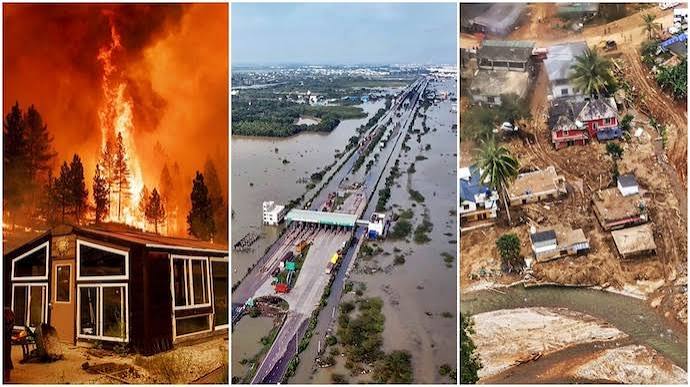
New Delhi, November 4: India experienced extreme weather events on 92 per cent of days during the first nine months of 2026, resulting in 3,220 deaths, damage to 4.25 million hectares of agricultural land, destruction of 128,334 houses and the loss of 47,244 animals, according to the Climate India 2026 report released by the Centre for Science and Environment (CSE) and Down To Earth on Tuesday.
The report highlights the growing frequency, intensity and geographical spread of extreme weather events across the country, warning that their devastating impact is increasingly affecting vulnerable communities.
Releasing the report at a webinar, CSE Director General Sunita Narain said India was witnessing almost one extreme weather event every day, leaving communities with little time to recover before the next disaster struck.
“This is the human face of climate change,” Narain said, emphasising that extreme weather had become a nationwide challenge requiring urgent attention from governments.
Himachal Pradesh and Uttar Pradesh among worst affected
Uttar Pradesh and Himachal Pradesh experienced extreme weather events on nearly 64 per cent of the 273 days covered by the report, making them the most frequently affected states.
Uttar Pradesh recorded the highest number of deaths at 811, followed by Maharashtra with 286 and Bihar with 245.
Maharashtra suffered the greatest agricultural losses, with 2.83 million hectares of cropped land affected. Uttar Pradesh followed with 0.69 million hectares and Bihar with 0.23 million hectares.
Northwest India recorded the highest frequency of extreme weather events, with 235 event days, followed by eastern and northeastern India with 218 days.
The report also highlighted significant climate records during 2026. February was India’s driest since 1901 and the fourth warmest in 125 years. July recorded the country’s third-highest mean temperature for the month, while minimum temperatures were the second highest on record.
Five-year trends reveal growing climate risks
The report’s assessment of 2022–2026 reveals a sharp increase in extreme weather events and their consequences.
The proportion of days affected by extreme weather increased from 86–88 per cent in 2022 and 2023 to 93 per cent in 2024 and 99 per cent in 2025.
Over the five-year period, extreme weather events claimed more than 16,000 lives across India. Agricultural damage also increased significantly, with at least 20.6 million hectares of cropped land affected between 2022 and 2026. More than 82 per cent of this damage occurred during the last three years.
Kiran Pandey, Programme Director, Environmental Resources at CSE and lead author of the report, said farmers had faced particularly severe challenges during the first nine months of 2026.
The report also highlights changing seasonal patterns, including warmer winters, fewer cold-wave events and the early arrival of heatwaves in some regions.
Despite the southwest monsoon recording 13 per cent less rainfall than the long-period average in 2026, heavy rainfall, floods and landslides occurred somewhere in India on all 122 days of the monsoon season.
Focus needed on resilience and risk reduction
Down To Earth Managing Editor Richard Mahapatra said the country was witnessing the emerging reality of a warming world.
He stressed the need to shift from disaster response towards risk reduction and resilience-building, including improved drainage, water-recharge infrastructure and restoration of forests and green spaces.
Narain said governments needed to recognise extreme weather as a pan-India challenge rather than treating it as an isolated regional problem.
The Climate India 2026 report is available for free download on the CSE website.